
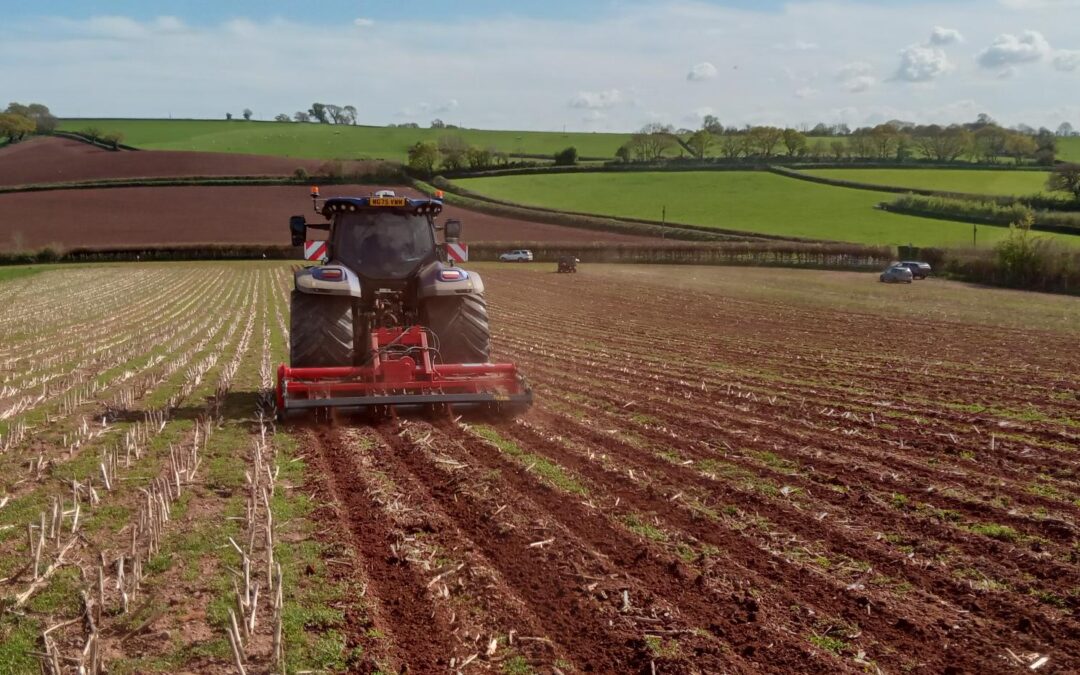
WRT’s first ADOPT project – ADOPT stands for Accelerating Development Of Practices and Technologies – is looking for a better way. ADOPT is part of Defra’s Farming Innovation Programme, delivered by Innovate UK, which funds farmer-led research trialling new technologies and methods on working farms to improve productivity, sustainability and resilience.
This project, called “Proving success of maize production into living mulches,” is a partnership between Elston Farm Partnership, a neighbouring farm, WRT (as facilitator), and ADAS (as weed control specialist and trials advisor).
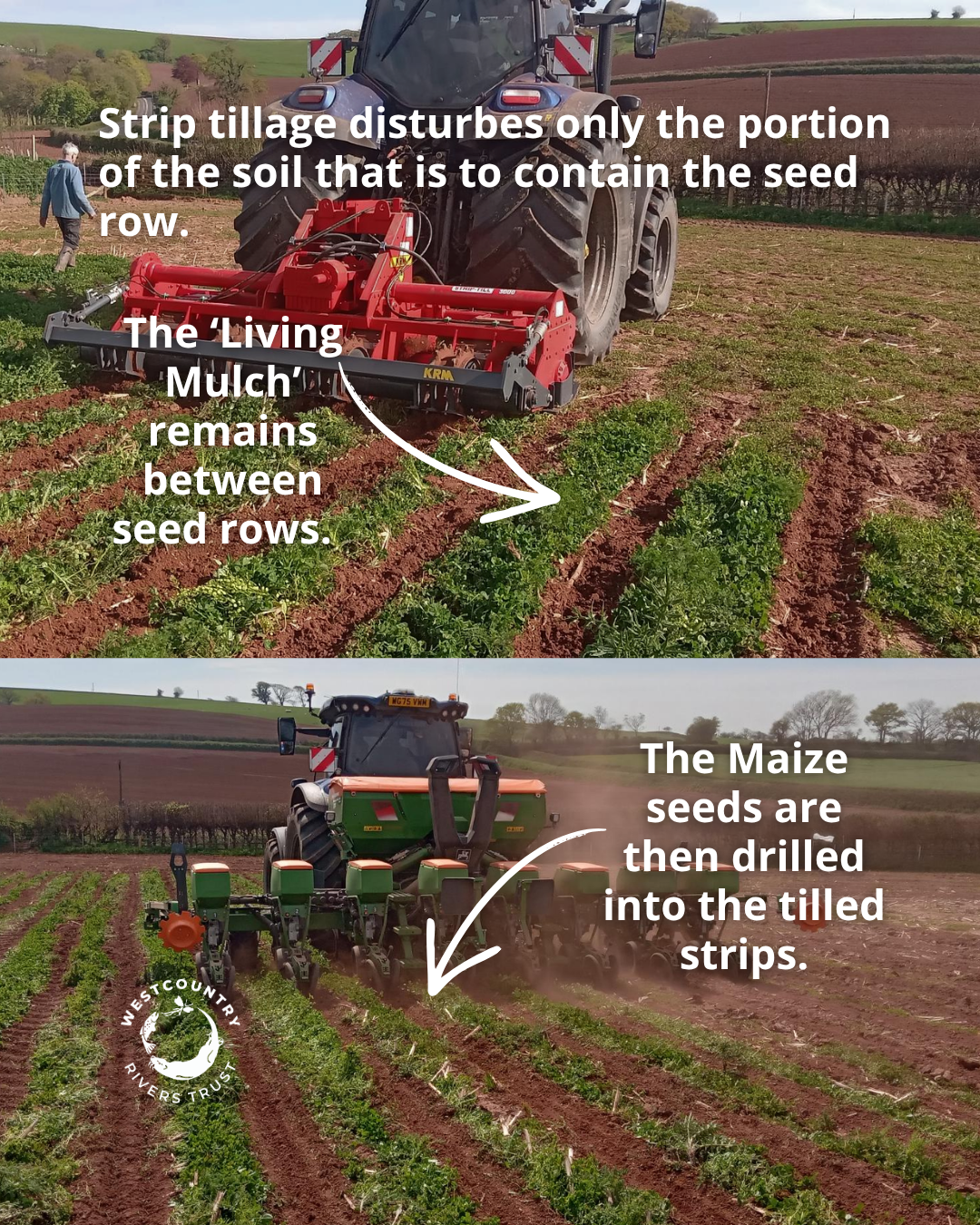
Running over two years, the trial will assess whether “living mulches” – ground-cover crops such as dwarf white clover, grown alongside the maize – can keep soil continuously covered, support biodiversity, protect soil structure and nutrients, and reduce environmental impact, all while maintaining maize yields and the quality of the crop as animal feed.
The trial will compare different cultivation methods – including strip-till (cultivating only where the seed is planted) and direct drilling (planting straight into undisturbed soil) – across two ground-cover systems (white clover and a cover crop), against a control of conventional ploughing and cultivation. It will assess how each combination performs in terms of crop growth, forage quality, soil health, and cost and resource efficiency.
The ultimate goal is to develop and demonstrate maize-growing systems that farmers elsewhere could realistically adopt. If successful, this could offer a practical way to reduce the soil and nutrient runoff associated with conventional maize production, helping to protect rivers across the westcountry.
