
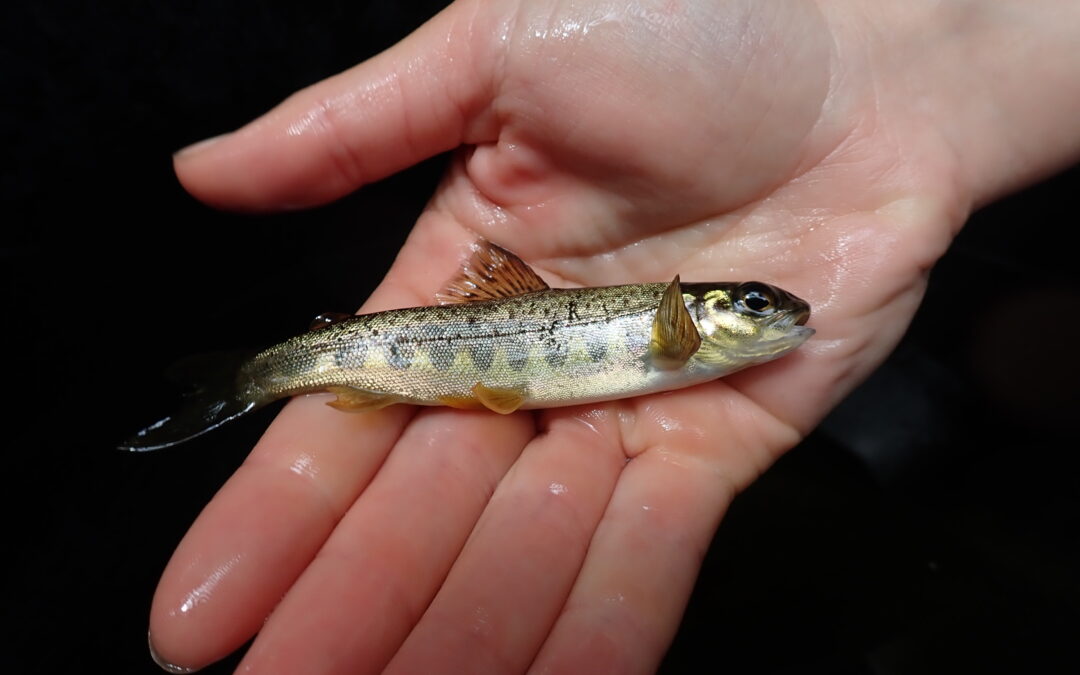
New research, from the University of Exeter, suggests that chalk-stream salmon could be classified as a new subspecies within Salmo salar. The work, led by Dr Andrew King and Prof. Jamie Stevens, involved the genetic characterisation of salmon from 42 rivers, focusing on the populations on both sides of the English Channel, including fish from chalk streams in southern England and northern France. Chalk streams are a globally rare and threatened habitat. Of the 200 or so known chalk streams, some 85% are found in southern and eastern England, but only six hold significant salmon populations: the Frome, Piddle, Hampshire Avon, Stour, Test and Itchen. The remaining rivers are found in northern France, Denmark and New Zealand.
The study investigated levels and patterns of genetic diversity and identified four main regional groupings of rivers, namely English chalk, French chalk, English non-chalk, French non-chalk populations. The salmon from chalk streams on both sides of the Channel were closely related to each other – and genetically distinct from salmon in nearby non-chalk rivers. However, there were some differences between the Uk and French chalk salmon. The rivers of Upper Normandy had for many years been stocked with salmon, mainly from rivers on the east coast of Scotland. The genetic signal of this stocking persists today, with French chalk salmon still showing a marked level of non-chalk ancestry.
Other analyses demonstrated that the chalk salmon, and especially those from the Hampshire Basin rivers have high conservation value. Salmon from the seven UK chalk stream rivers had the lowest levels of genetic diversity, being lower than the majority of other rivers, and suggest that loss, i.e. local extinction of chalk stream salmon, would result in an overall decrease in levels of genetic diversity within Atlantic salmon of approx. 6%.
Overall, the results suggest that, as a consequence of genetic, ecological and geographical distinctiveness, the Atlantic salmon rivers in the study could be classified as two distinct groups of populations that would merit separate management and conservation. The authors proposed that chalk salmon are discrete enough that they could be recognised as a distinct subspecies within Salmo salar and propose the name S. salar calcariensis.
The paper, published in the journal Evolutionary Applications, is available Open Access and is entitled: “The chalk streams of southern England and northern France harbour substantial unique components of the overall genetic diversity of Atlantic salmon (Salmo salar L.).”
