
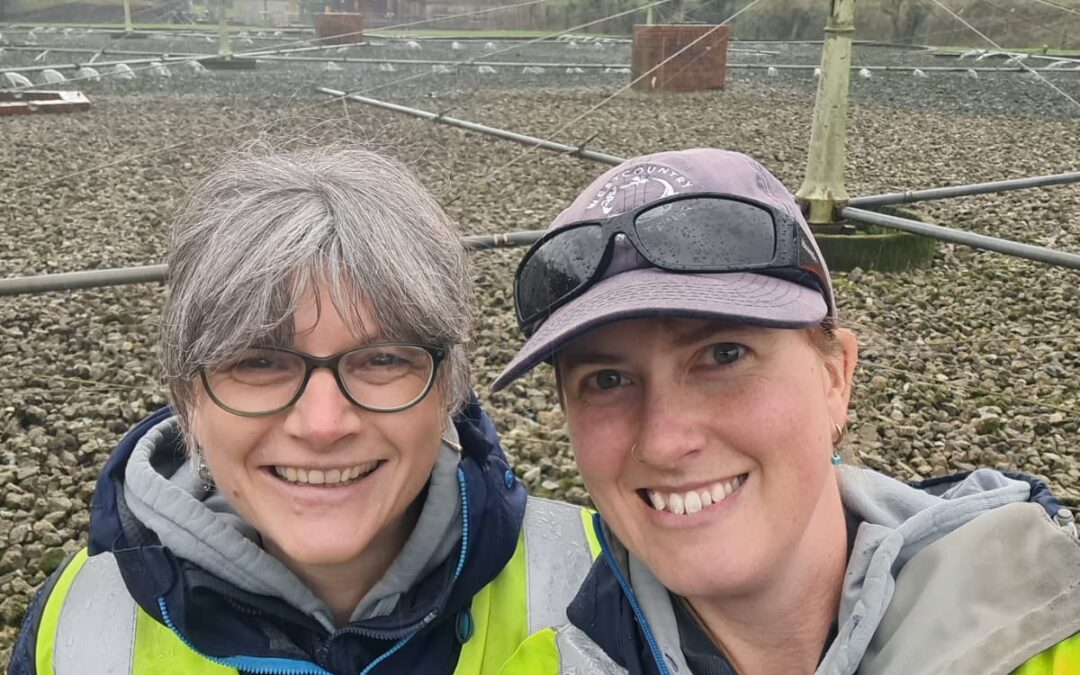
The day commenced with a comprehensive guided tour of the treatment works, led by a sewage treatment technical specialist from SWW. The tour provided valuable insight into the physical and biological treatment processes employed on site, including the separation of liquid and solid waste and the role of bacterial decomposition on biobeds in treating organic matter.
In the afternoon, participants assembled and piloted the Xylem SurfBee autonomous surface vehicle. This advanced, remote-operated platform can be equipped with continuously logging, multiparameter water quality and/or flow sensors, enabling the collection of high-resolution spatial and temporal data along river transects.
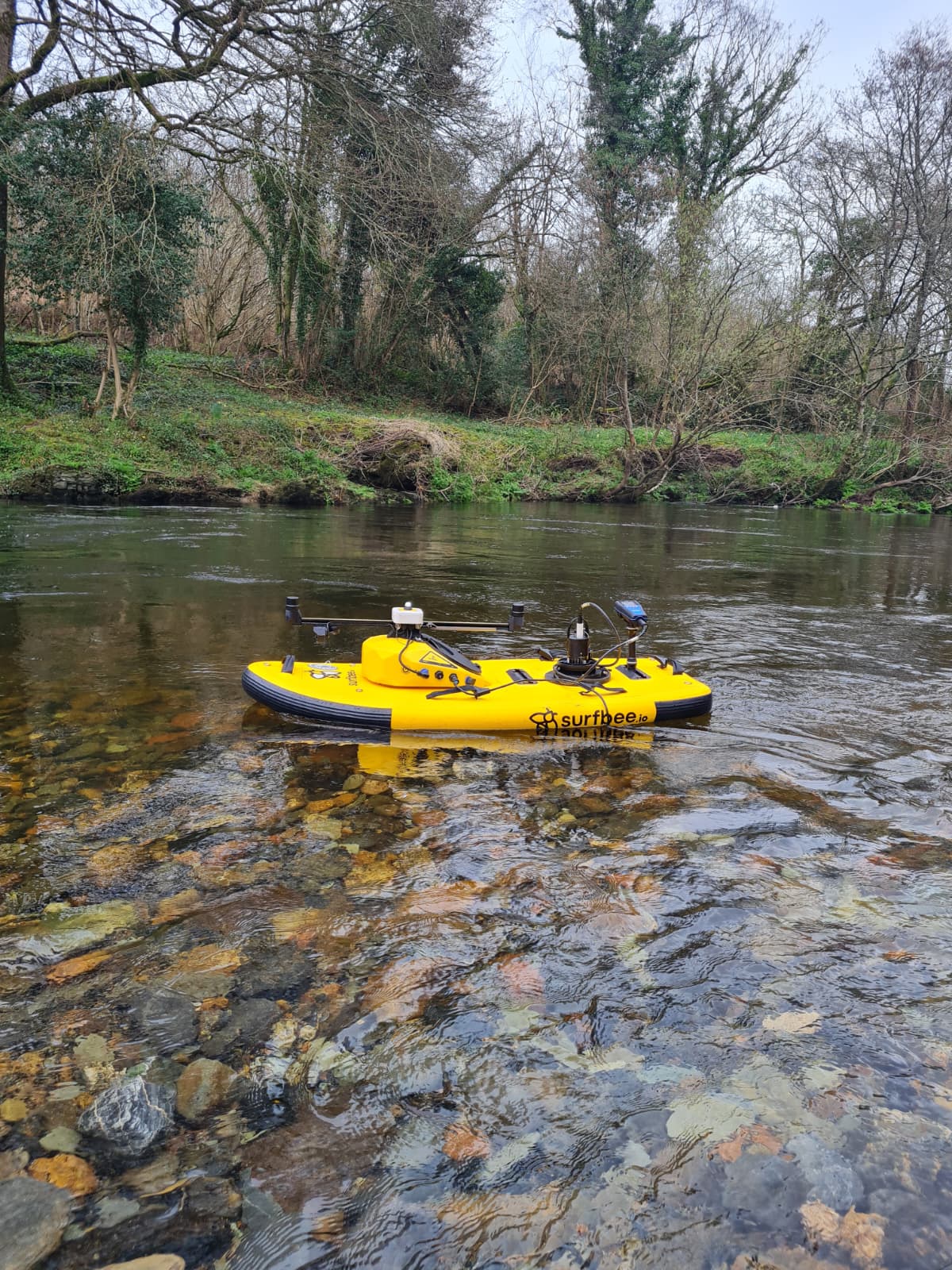
Xylem SurfBee autonomous surface vehicle
The deployment of this technology will support:
• Identification of the precise locations of discharges
• Improved understanding of how pollutant concentrations disperse downstream of outfalls
• Assessment of how these patterns vary under different flow conditions and across seasons
The data generated will contribute to the development of more sophisticated predictive models, enabling industry partners to anticipate pollution events with greater accuracy and respond more effectively.
