
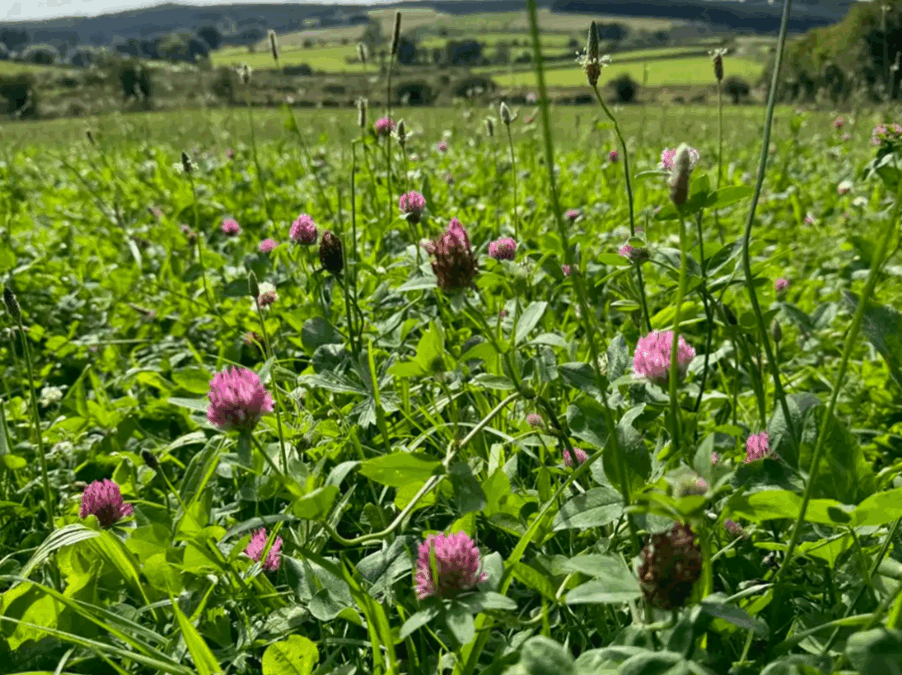
- Deeper rooting plants that benefit soil structure, increase water infiltration rates, and can reduce the reliance on artificial fertilisers;
- Greater floristic diversity which benefits pollinators, and provides livestock with a more varied diet – think mixed salad as opposed to iceberg lettuce;
- Potential for carbon capture if they are left alone for several years and especially if sown with minimum tillage methods;
- Potential health benefits for livestock and the humans that eat their meat.
What was our trial about? Well our trial started with a group of Dartmoor farmers approaching me as the Upstream Thinking advisor in the Dart catchment and asking if South West Water would be interested in funding a trial to show if and how herbal leys might work on Dartmoor Farms. Long story short – SWW were keen and in 2022 I embarked on the trial with the farmers, setting out on a mission to survey the chosen trial and control fields for soil chemistry and structure, existing floristic diversity (the last thing we want to do is change a field that is already great for pollinators / infiltration etc), invertebrate activity, plus anecdotal evidence on how fields yielded. When I moved in to the team management role, Wendy Couch took over the trial and then Karen Saunders took it over when Wendy moved on to her new role in the Central Dartmoor Farm Cluster.
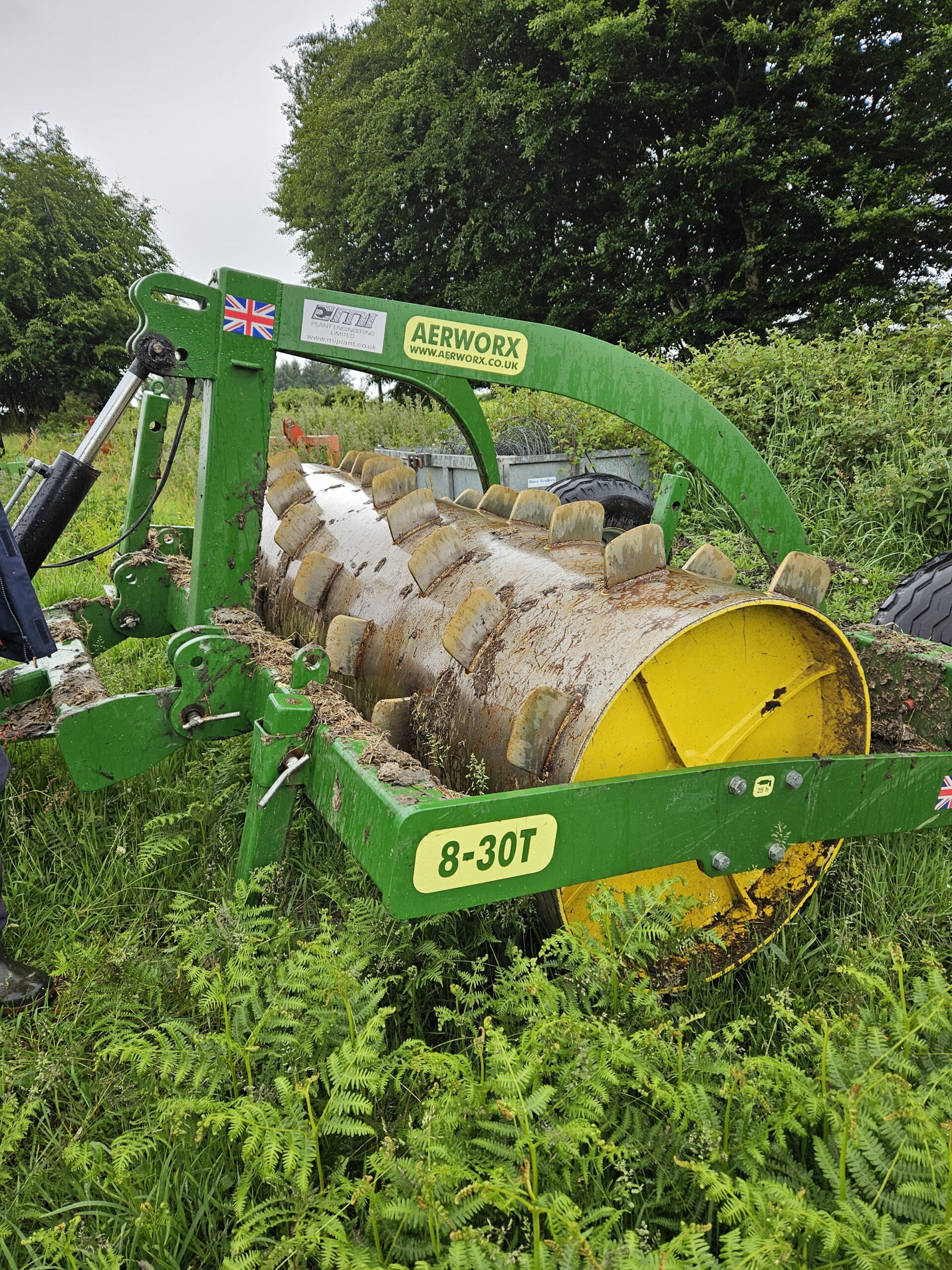
The soil aerator purchased through the trial
From a starting point of seven farmers, three had fields that were already diverse and there was subsequently no benefit in their participating. Another farm joined the trial a little late, but that left five on which various different practices were trialled against control conditions. The trial was too small a scale for statistical differences to be pulled out between farms, so the parameters were measured for each farm before and after practices were changed, and between control and trial fields. The practices trialled included: introduction of mob grazing, sowing of various species mixes using different establishment methods, and application of lime to ensure that soil pH was optimum for a herbal ley. The results of the trial are complex and multifarious, and need a lot of explanation, using more words that I have here. A full report has been produced for the participating farms and for further understanding (we’re not able to publish the report in its current form as it contains lots of details about the individual farms).
On 13th June I attended the wrap-up event that Karen Saunders organised for the trial, which was attended by several of the farmers, South West Water, myself and Wendy. We looked at various sites and Karen later gave an excellent presentation, all whilst eating a pasty. The technical conclusions can be found in the report but the conclusions I drew were:
Trials can lead to amazing things – this trial helped pull together a group of 8 very different farmers in the Widecombe part of Dartmoor. This group has since gone on to develop the Central Dartmoor Landscape Recovery scheme, which has the potential to change the way that Dartmoor is managed for the very long term.

Field discussion at the wrap-up event
Trials are very, very challenging! We didn’t receive additional funding for staff time to run the trial as we were already being funded to be there through the Upstream Thinking project. Funding was provided however to pay the farmers the costs of seed, lime and establishment costs, and paying us for soil and forage analysis. Other than that we had to beg and borrow people and their time. Numerous WRT staff have helped with aspects of the trial (Fergus Burney and Kristian Masters to name two) and we are grateful for their good will.
Last but certainly not least, trials can and should leave a legacy – this trial has led to a tremendous feeling of good will from the group of farmers involved, towards WRT and SWW. They are extremely keen to carry on and learn more, and we are keen to find a way to facilitate this, especially as these farmers have influence on an area of land that is the headwaters to many of our major rivers.
P.S. this is a simplified write-up. It was actually a lot more complex and we also worked with Dr Mark Whiteside and colleagues at Plymouth University on a plot-scale trial in Widecombe…
by Annabel Martin
Help us do more for our rivers
Want to get in touch?
Want more news like this?