Droughts in November?
With winter flooding on the horizon, the Environment Agency’s focus might seem odd. But there’s good reason for looking ahead.
While flooding is an important issue to deal with, it tends to be a localised, acute and short-term problem. Droughts on the other hand are a symptom of long-term water stress. Therefore, they can be prevented by thinking long-term and preparing early. Andy Turner, Water Resource Manager at the Environment Agency, stressed this on Farming Today on 14/11/25:
“We want farmers to consider their water requirements for next year now, and to look at the business risks of not having that water – they shouldn’t just hope for rain.”
The feature focused on Southern and Eastern England, but here in the South West we are no strangers to drought, and we face our own distinct challenges.
Larger growers with irrigation requirements often have abstraction licences which allow them to take water directly from rivers. However, they may not be allowed to use these abstractions when the river flows are low in summer. Therefore, Andy urges for winter river abstraction and storing that water until required in spring or summer when most water is needed in an arable or vegetable growing system.
In the South West, we have more livestock farms, which tend to use less water, but every day of the year. Many farms have a borehole or well that largely fulfils their water requirements under normal conditions. Our recent farm survey for the Water Net Gain project revealed a key point: Most livestock farmers are using tap water as their main water source or at least using it occasionally when wells and boreholes dry up.
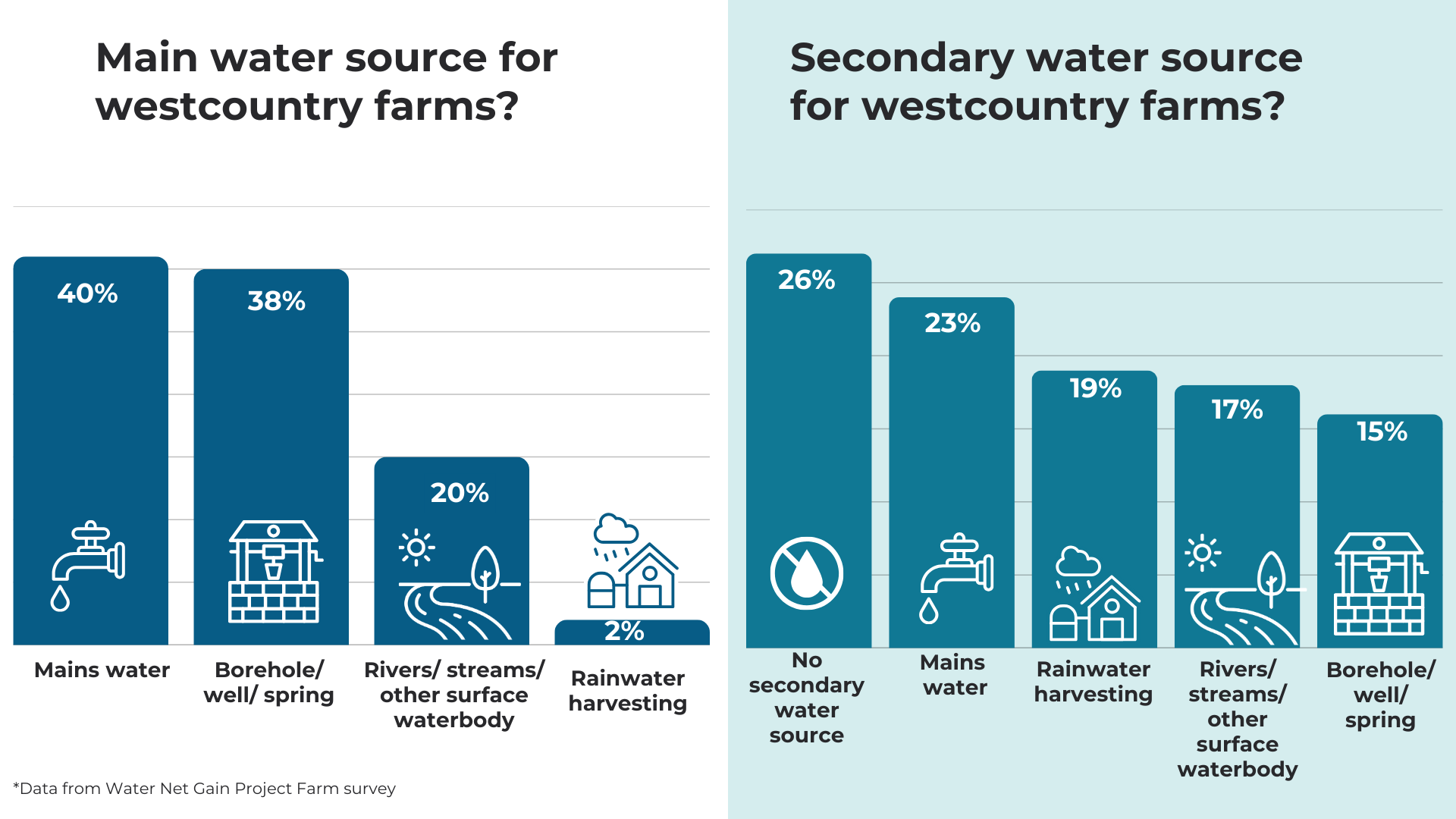
Tap water is great, because having access to it means that there is no risk for animal welfare issues if the borehole or well is drying up. However, it is getting more expensive, and water companies need to reduce their demand volumes quite significantly by 2050, so that more water stays in the environment to protect river ecosystems and ensure sustainable water supplies for future generations.
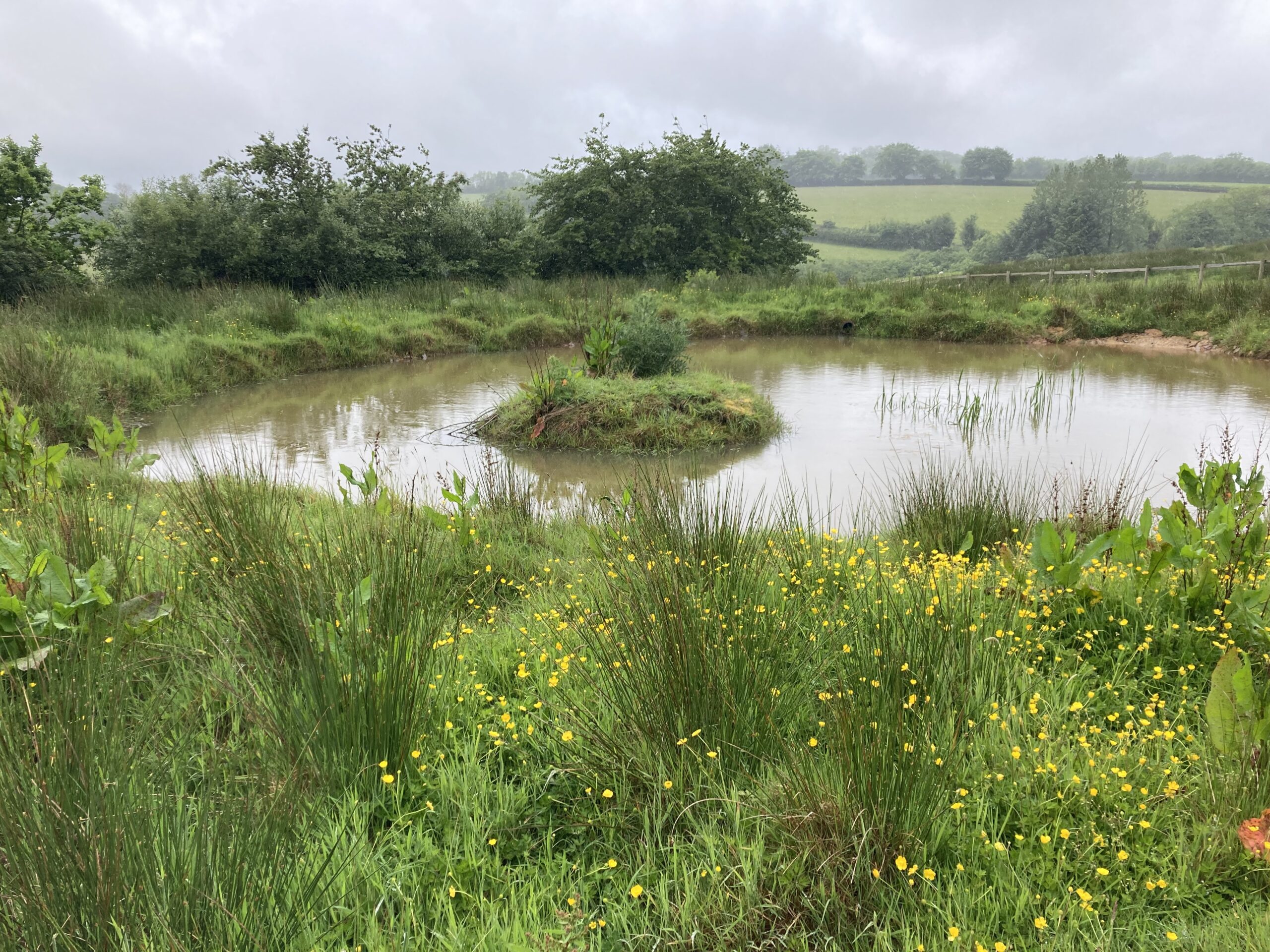
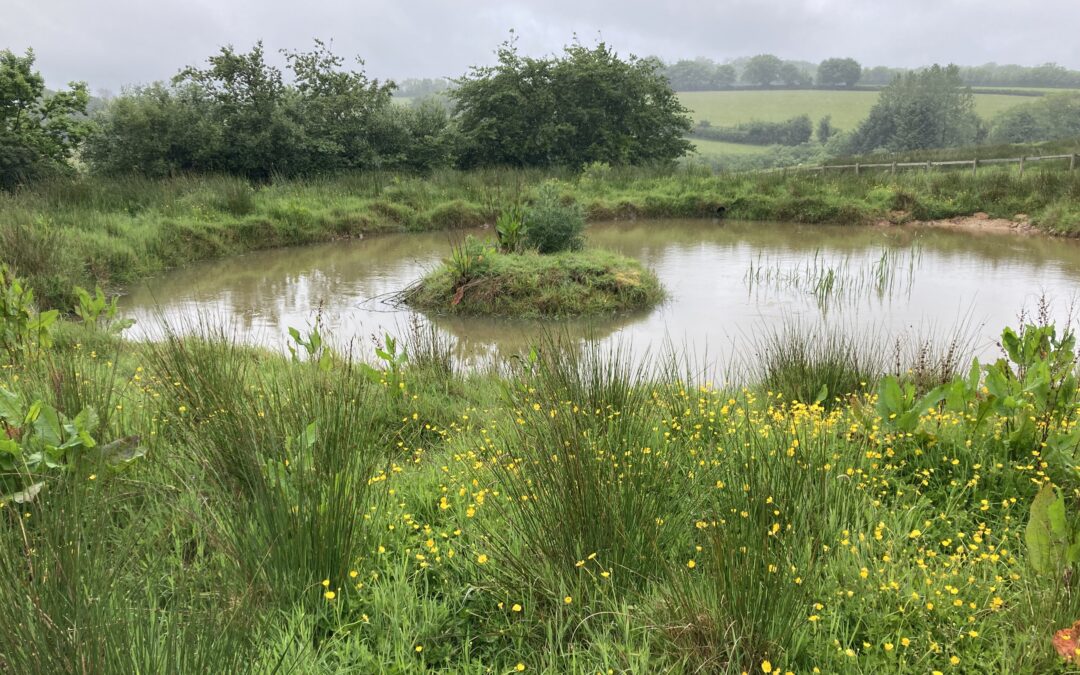
In response to this developing situation our Water Net Gain project is investigating the creation of ponds on farms, to provide a secondary water source instead of mains water during dry periods. The benefits are threefold: reduced farm bills, greater water resilience, and less pressure on water company supplies, which must balance the public, businesses and the environment. We are still in the feasibility stages and are working on the best ways to secure funding for this, where this scheme will have the biggest impact, and what the ponds would need to look like. But what we do know is that these ponds would provide an alternate water source, improve water quality in downstream rivers, and support biodiversity. Follow our progress on the Water Net Gain project at https://wrt.org.uk/project/water-net-gain/
It’s always important to think about the impact of droughts on farm businesses and the environment early, to be prepared. And water conservation isn’t just a farming issue – it’s something we can all contribute to as water users.