
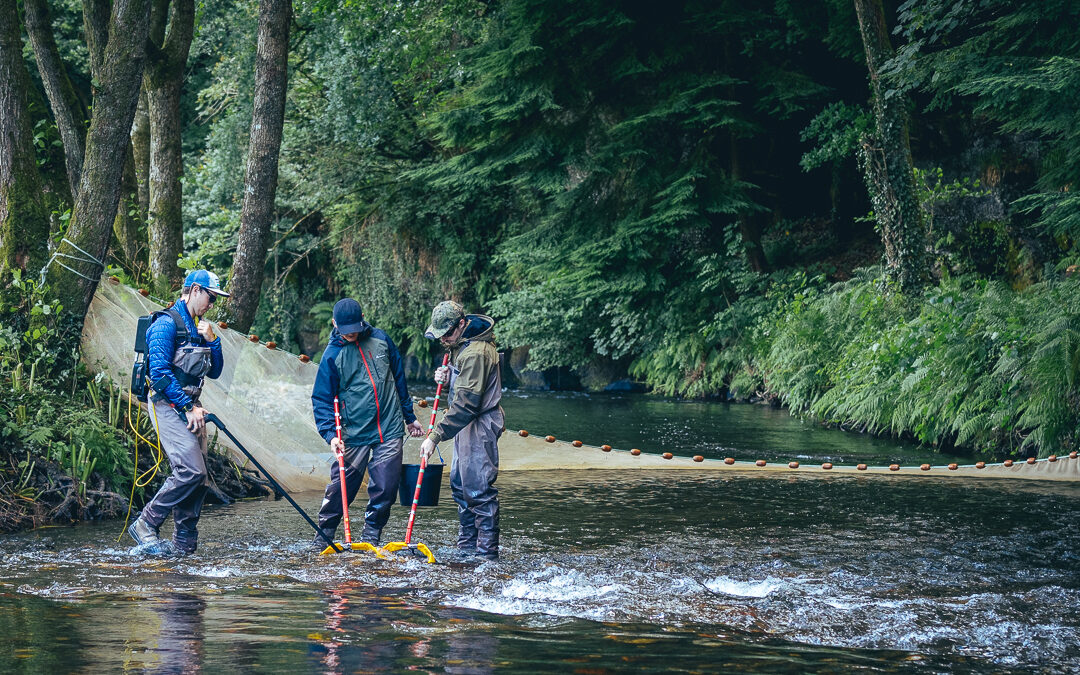
WRT Rivers and fisheries team electrofishing to survey fish numbers. Credit Will Templeton
With the end of September, the 2025 electrofishing season has come to a close and at Westcountry Rivers Trust we’ve been busy surveying across the summer! Since the start of June we have conducted more than 370 surveys across 20 catchments through Devon, Cornwall and Somerset. These surveys are an essential element of our work to protect and restore rivers in the Westcountry.
Electrofishing is a technique where a small electric current is passed through the water to immobilise fish, enabling them to be caught and measured. Fish recover quickly and are released back into the stream where they were found, after being measured to record their length. This helps to determine the age of the fish, giving a clearer picture of the population structure, which itself is an indicator of the health of the river. In the Westcountry, electrofishing is often the only feasible method to survey fish populations. This provides us with data on the abundance, species diversity, age, and size of fish within a stream. By repeating these surveys each year, we can observe trends within fish populations, informing decisions of where we should target works to improve the rivers and monitoring the response following our interventions.
Most of our surveys are conducted using a timed effort methodology called a “Fry Index Survey” standardised to five minutes of fishing effort allowing an abundance index to be quickly obtained. These are quick and efficient surveys which allow us to cover several sites a day in order to build up a picture of how fish are faring across a catchment, it can be particularly useful at spotting barriers to migration if surveys are located above and below a weir.
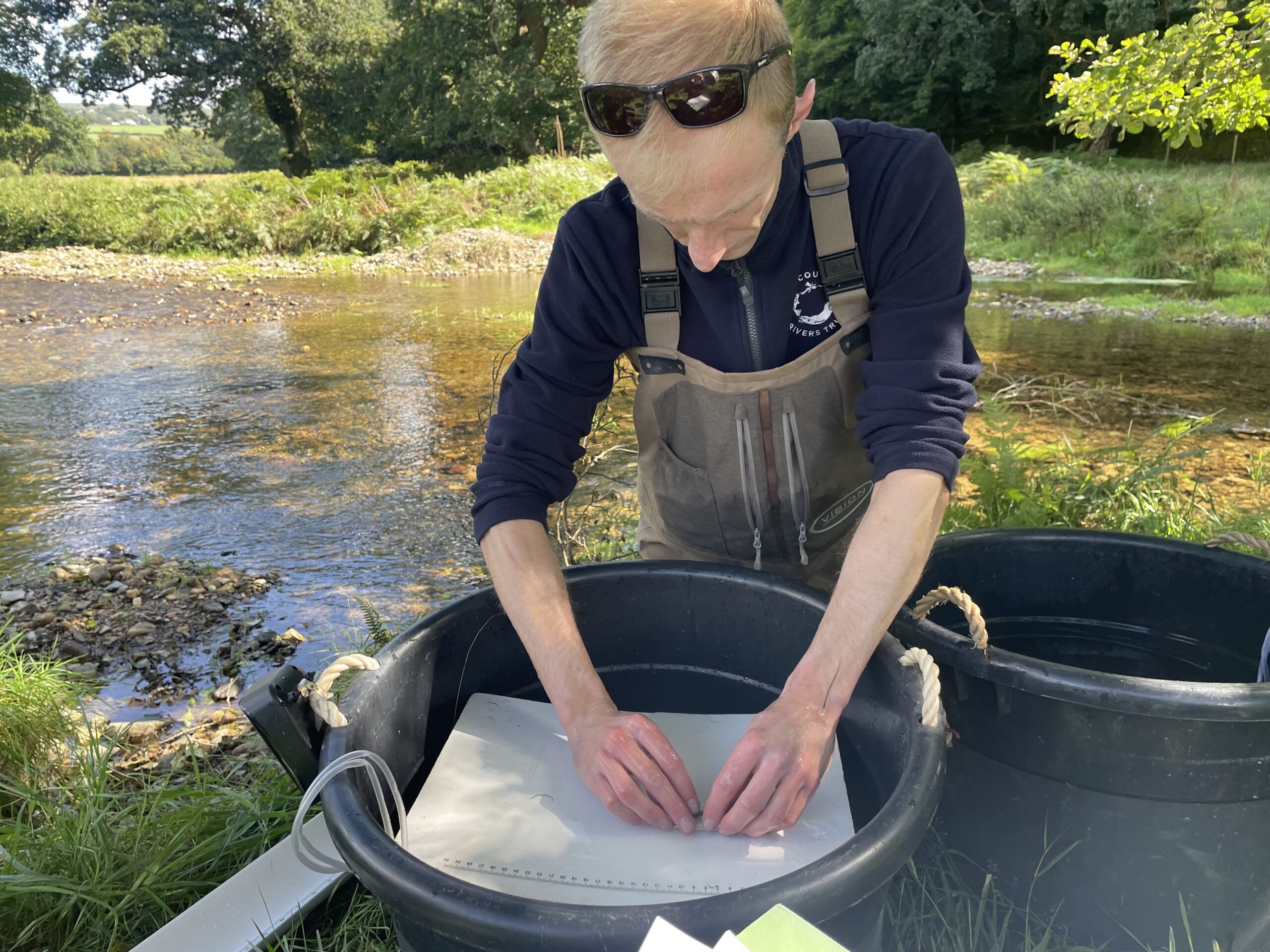
Measuring and recording the fish before release.
We also conduct quantitative surveys where we isolate a stretch of the river using nets and fish the stream multiple times. The number of fish caught in each pass, and their size, is recorded. This depletion methodology allows for an accurate count of the number of fish in the stream and allows for comparisons between sites within and across catchments however we can only get a couple of surveys completed in a day.
Our aim through these surveys is to measure the Atlantic Salmon populations in our rivers however we have also seen species such as brown trout, bullhead, stone loach, stickleback, and even a flounder!
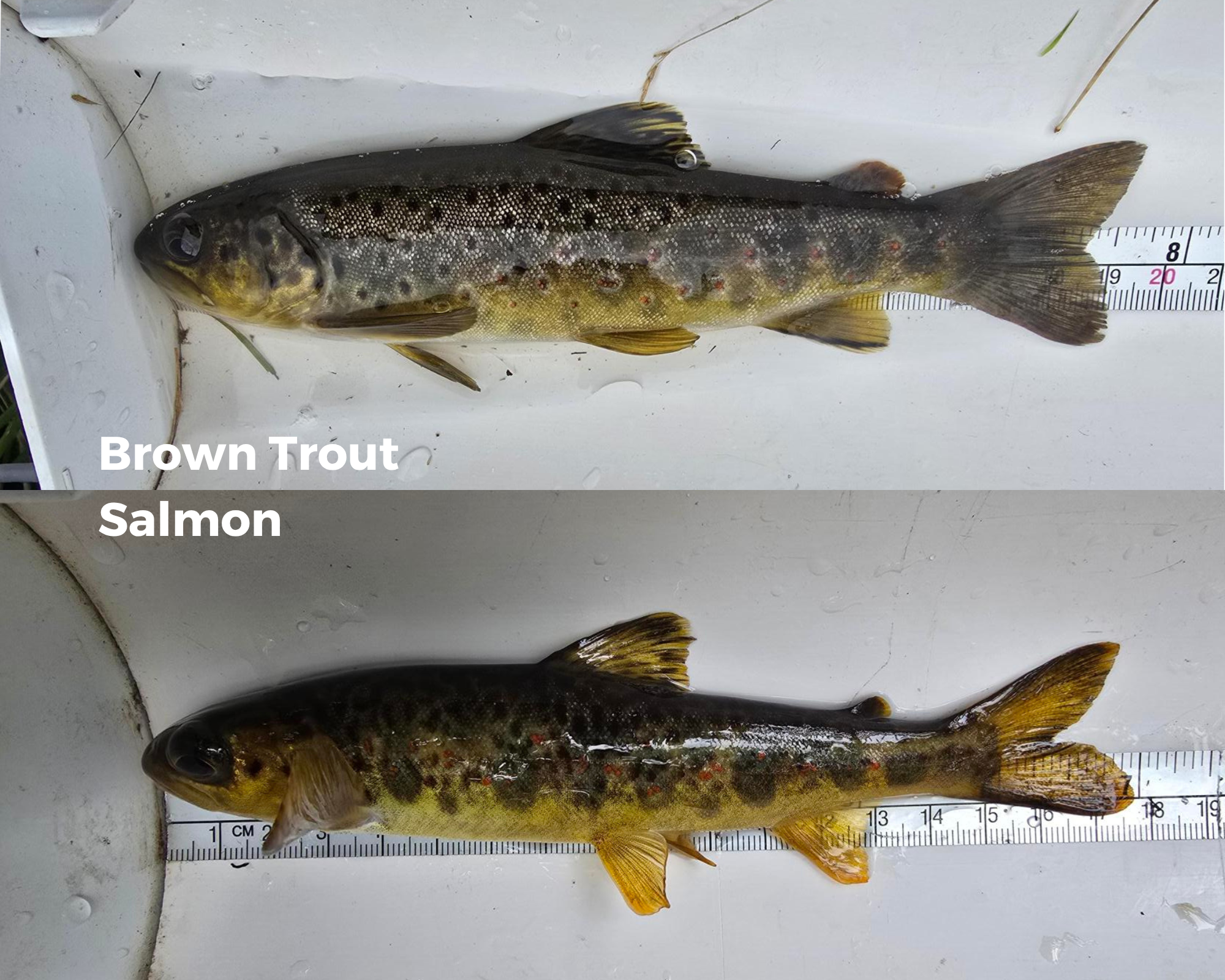
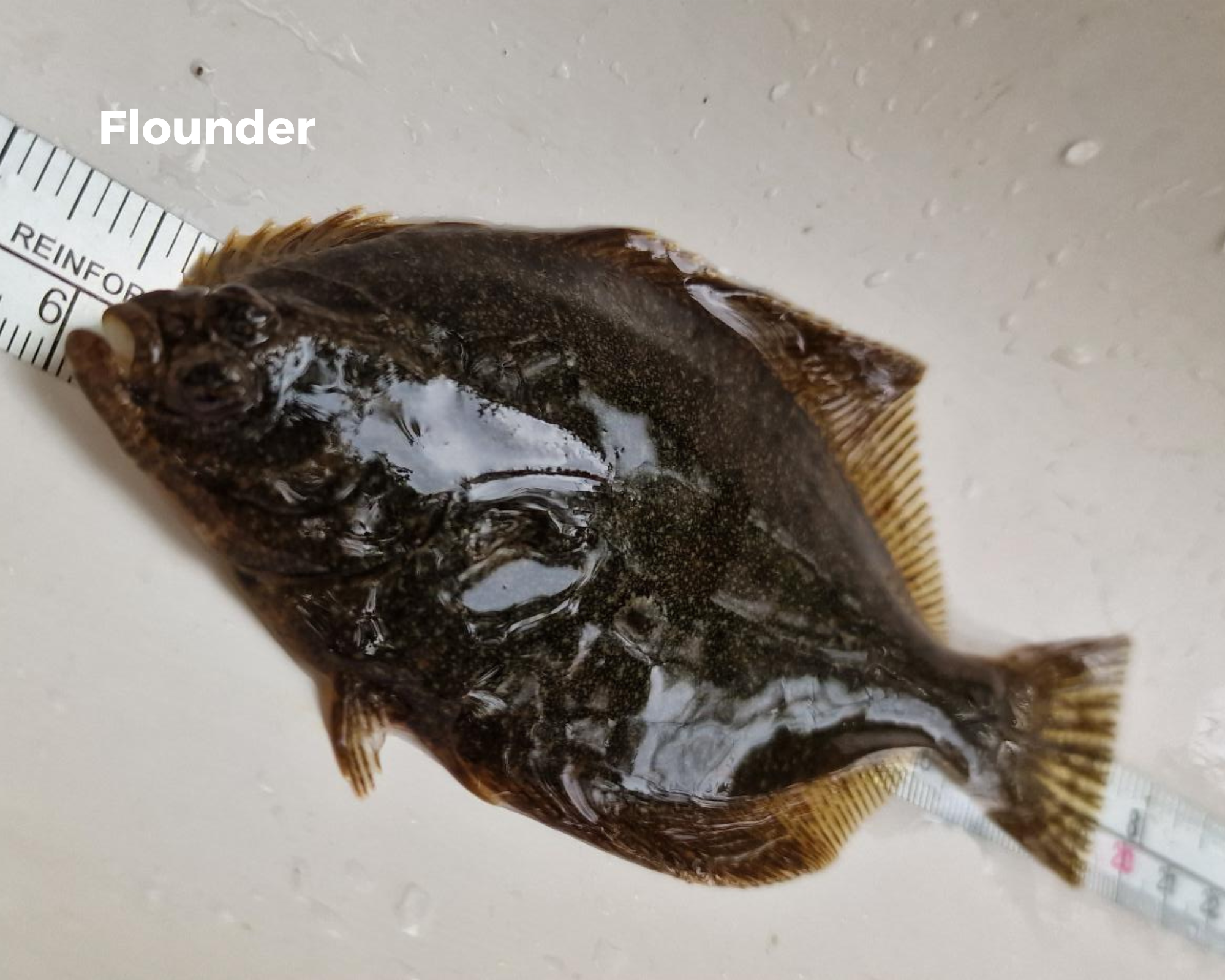
Pictures Credit: Craig Renton